Do You Need a Permit for a Dumpster in Norwalk? Here's the Real Answer
Permit rules for a dumpster come down to one question: is it on private property or in the public right-of-way? And in Connecticut, the answer never comes from the county.
ReadGuides guide
Most household and construction debris is fair game in a roll-off dumpster — but hazardous materials never are. Here's the real breakdown, and why it pays to double-check with your town.
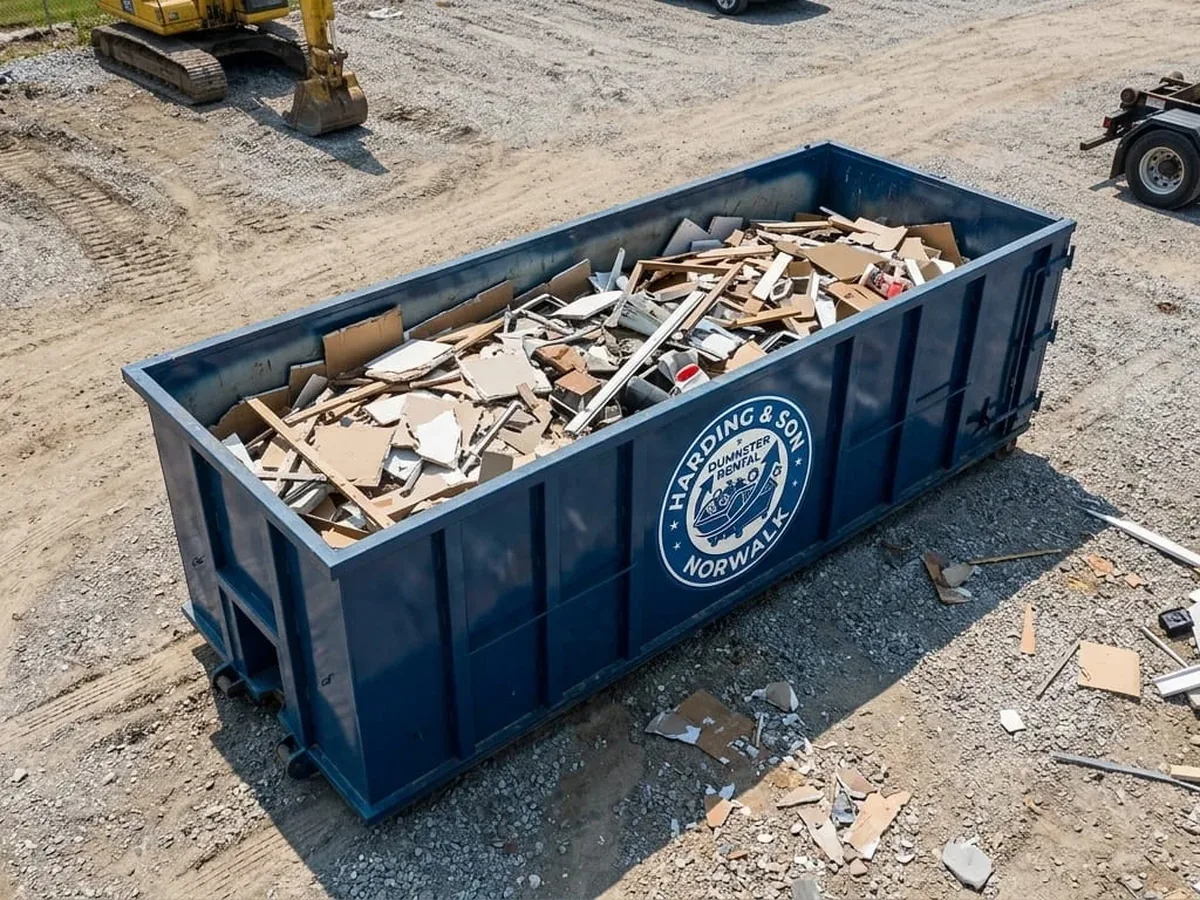
The short version: if it's ordinary household junk, construction debris, or yard waste, it almost certainly can go in a roll-off dumpster. If it's something that could leak, ignite, explode, or contaminate groundwater, it can't — full stop, no matter how small the amount. The longer version matters because "hazardous" isn't always obvious, and getting it wrong can hold up your pickup or bring an extra fee for re-sorting a load once it's already been hauled away.
This comes up constantly on renovation and cleanout jobs around Norwalk, because most projects generate a mix: mostly ordinary debris, plus a handful of items that came out of a garage, basement, or shed where things accumulate for years without much thought about how they'll eventually get disposed of. Knowing the categories ahead of time means you can set those items aside before the dumpster ever arrives, instead of discovering a problem partway through loading.
This covers the bulk of what actually fills a dumpster on a typical Norwalk-area job — renovation debris, cleanouts, yard work, and general construction waste:
Clean concrete, scrap metal, and yard debris are often sorted out at the disposal end for recycling and recovery where that's practical. That's not a legal requirement placed on you as the customer — it's simply good practice on the disposal side — but it's worth knowing your metal and concrete aren't automatically landfilled by default when there's a better option available.
One thing worth noting: "general household trash" covers a lot of ground, but it doesn't mean every single item in a house is automatically fine just because it's part of a cleanout. The categories above are the ones that make up the vast majority of a typical load, and if what you're clearing out matches this list, you're in good shape. It's the smaller, easy-to-overlook items — the stuff tucked in a corner of the garage or a shelf in the basement — that tend to fall into the never-allowed category below.
Connecticut treats certain materials as hazardous waste regardless of quantity, and no roll-off dumpster from any provider is going to accept them. This isn't a house policy; it's a real regulatory line, and the Connecticut Department of Energy and Environmental Protection (DEEP) is the state agency that sets and enforces hazardous waste handling rules statewide. The categories that come up most often on residential and light-commercial jobs:
If you're not sure whether something on your job site falls into one of these categories, ask before it goes in the container. It's a much shorter conversation on the front end than sorting it back out of a loaded dumpster later, which slows everyone down.
A couple of these deserve a little more explanation because they're easy to miss. Refrigerant-holding appliances are banned from general disposal not because of anything visible on the outside, but because of the refrigerant sealed inside the coils, which is regulated at both the state and federal level and has to be professionally reclaimed before the appliance itself can be scrapped. Asbestos is another one people underestimate — older homes throughout Fairfield County, especially ones built well before recent decades, sometimes have asbestos in old insulation, floor tile, or siding, and disturbing that material without a licensed abatement contractor isn't just against the rules, it's a real health risk to everyone on site.
State-level hazardous waste rules through DEEP apply consistently everywhere in Connecticut, but local disposal specifics — like what your town's transfer station will or won't take for residents doing their own drop-off, or any extra local restrictions — can vary town by town. Norwalk's own transfer station policies may differ slightly from Westport's, Wilton's, or Ridgefield's. If you're supplementing a dumpster rental with a personal transfer-station run, or you're simply unsure whether something local applies to your specific project, a quick call to your town's public works department clears it up fast, and it's worth doing before loading day rather than after.
This is especially worth checking if your project spans more than one town, which happens more often than you'd think in this part of Fairfield County — a contractor based in Norwalk doing a renovation in Wilton, for instance, or a family splitting a cleanout between a Norwalk home and a relative's place in Westport. The dumpster rules themselves don't change town to town, but any personal drop-offs you're handling on the side are worth a quick confirmation with whichever town's transfer station you plan to use.
Some materials aren't hazardous but still need a heads-up because of weight or handling, not outright prohibition. Flagging these when you book helps make sure the container size and weight allowance actually fit the job:
| Material | Status |
|---|---|
| Roofing shingles | Allowed — but heavy; affects tonnage allowance |
| Wet drywall / flood-damaged material | Allowed — but heavy and often mixed with contaminants; mention it when booking |
| Dirt and excavated soil | Allowed in most cases — very dense, confirm weight limits first |
| Large appliances (non-refrigerant) | Generally fine — stoves, washers, dryers |
| Electronics (TVs, computers) | Often restricted — ask first, e-waste sometimes needs separate handling |
The pattern that causes problems isn't malicious — it's usually someone tossing an old can of deck stain or a leftover propane tank onto the pile without thinking twice, because it's sitting right there in the garage next to everything else that's fair game. A dumpster load with prohibited material mixed in can delay pickup while it gets sorted out, and in some cases adds a fee for the extra handling. Saving a five-minute phone call for later almost always costs more time than making it up front. If there's anything on your job site you're unsure about — an old container of who-knows-what in the back of the basement, a rusted-out propane tank from a grill nobody uses anymore — call (475) 242-2874 before loading day and it'll take thirty seconds to sort out.
This is especially true on estate cleanouts and older-home renovations, where whoever's doing the sorting often didn't accumulate the items themselves and has no idea what's actually in a given box or cabinet. Taking a slower first pass through a garage or basement — setting aside anything liquid, anything pressurized, anything that looks like it belongs in a hardware store rather than a landfill — before the dumpster goes in makes the whole job faster once loading actually starts.
Talk to a real person
Call (475) 242-2874 and describe the job. Flat price, stated tonnage allowance, and a delivery window on the same call.
Mon–Sat 7:00am – 7:00pm
From this guide
Liquid paint is treated as hazardous waste and can't go in. Fully dried-out, empty paint cans are typically fine, but it's worth confirming when you book, especially if you have a mix of both.
Most appliances are fine. The exception is anything that holds refrigerant — refrigerators, freezers, window AC units, dehumidifiers — which needs the refrigerant professionally reclaimed before disposal, per state and federal rules.
The Connecticut Department of Energy and Environmental Protection (DEEP) is the state agency responsible for hazardous waste guidance and enforcement. Their rules are consistent statewide, though individual town transfer stations can have their own additional policies for resident drop-off.
Yes, as long as none of it is hazardous material. Mixed construction and household debris in one load is normal and doesn't need to be separated, aside from items like scrap metal or clean concrete that are sometimes pulled out for recycling.
State hazardous-waste rules apply everywhere in Connecticut the same way. But local transfer station policies for residents can differ slightly from town to town, so if you're also doing a personal drop-off in addition to your dumpster rental, check with that specific town's public works department.
Keep reading
Permit rules for a dumpster come down to one question: is it on private property or in the public right-of-way? And in Connecticut, the answer never comes from the county.
ReadNor'easters bring a specific kind of mess to coastal Connecticut — downed limbs and wind debris, not floodwater. Here's how to plan cleanup, and why timing matters more than people think.
ReadFlood debris from a Norwalk River or harbor storm surge is heavier and more mold-prone than wind debris - here's how to size a roll-off and clean up safely before mold gets ahead of you.
Read